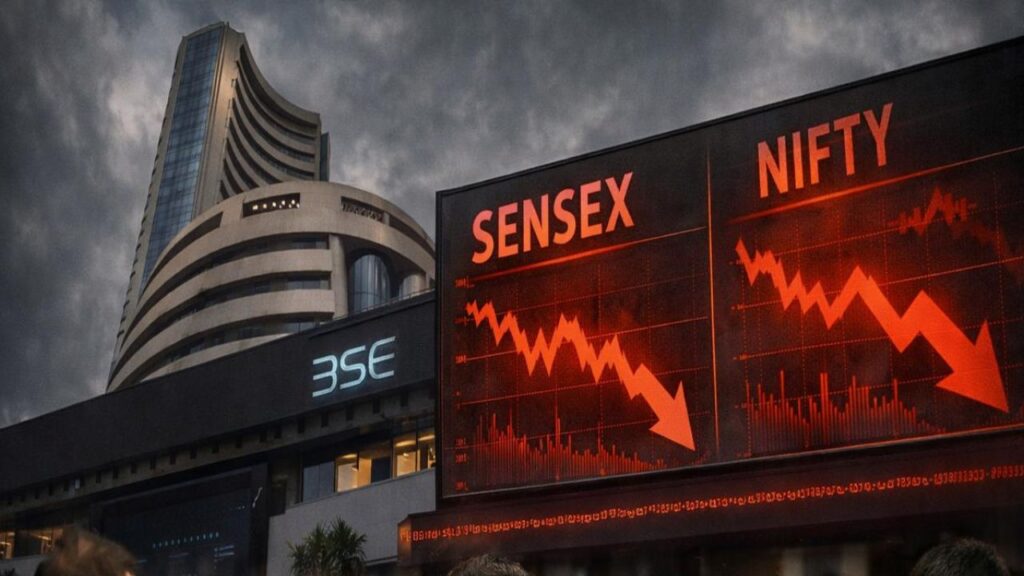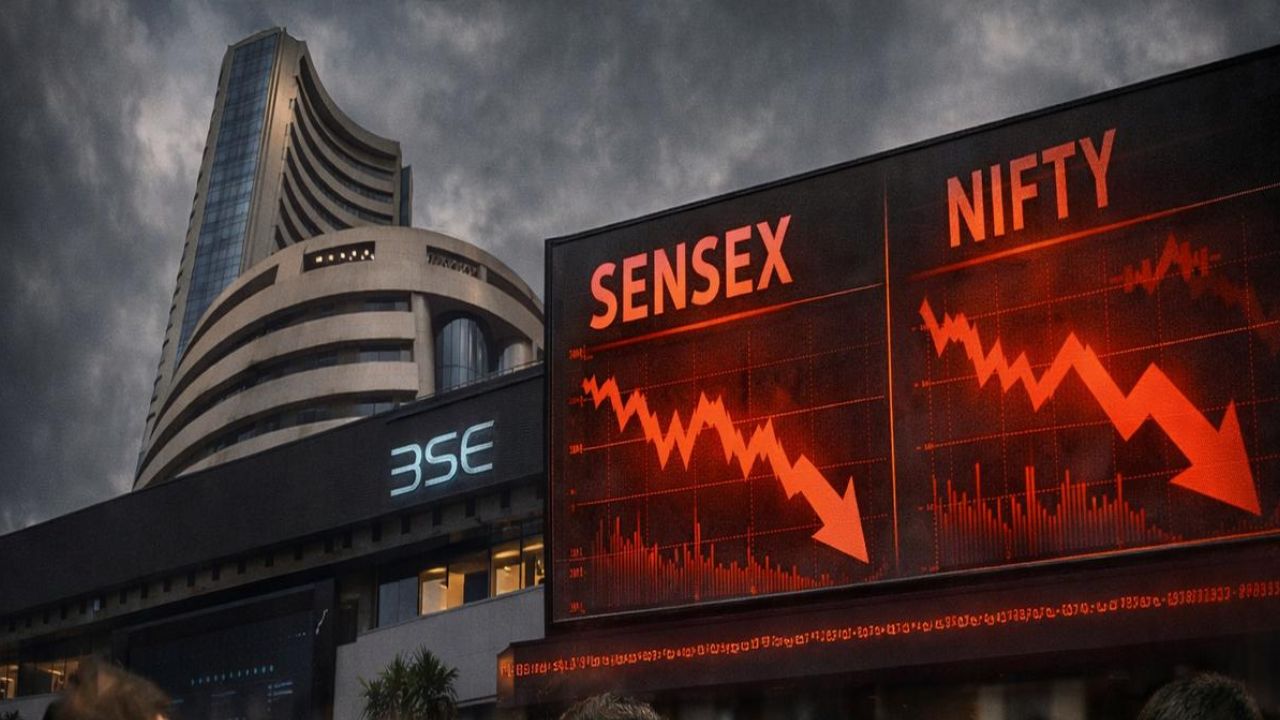

Indian stock markets took a sharp hit today, leaving investors rattled and analysts on high alert. The BSE Sensex tumbled nearly 600 points while the NSE Nifty50 slipped below the critical 24,200 mark, signaling broad-based selling pressure across key sectors. Moreover, a toxic combination of surging crude oil prices, relentless foreign investor outflows, and mounting global tensions made it one of the more unsettling sessions in recent weeks. Additionally, with major Q4 earnings results just around the corner, traders chose to stay cautious rather than take fresh positions. Here is a complete breakdown of why the stock market fell today and what it means for investors going forward.
BSE Sensex and Nifty50 Today: How Deep Was the Fall
The selling pressure today was swift and broad. Specifically, the BSE Sensex closed at 77,258.76, shedding 585.76 points or 0.75% from the previous session. Meanwhile, the NSE Nifty50 dropped to 24,160.30, falling 166.35 points or 0.68%, breaking below the psychologically important 24,200 level that traders had been closely watching.
Moreover, the decline was not confined to one or two sectors. In fact, banking stocks, IT shares, and select blue-chip names all came under pressure simultaneously, suggesting that institutional selling was widespread rather than sector-specific. Consequently, market breadth remained negative for most of the session, with declining stocks outnumbering advancing ones by a significant margin.
| Index | Closing Level | Points Lost | Percentage Change |
|---|---|---|---|
| BSE Sensex | 77,258.76 | -585.76 | -0.75% |
| NSE Nifty50 | 24,160.30 | -166.35 | -0.68% |
Rising Crude Oil Prices and US-Iran Tensions: The Biggest Trigger
Of all the factors at play today, rising crude oil prices emerged as the single most impactful trigger. Specifically, Brent crude reportedly crossed the $100 per barrel mark, a level that immediately sends alarm bells ringing in New Delhi and Mumbai. Furthermore, escalating tensions around the Strait of Hormuz, a critical global oil shipping route, raised fresh fears of supply disruption that could push prices even higher.
For India, higher crude oil prices are particularly damaging because the country imports more than 80% of its oil needs. Consequently, every dollar increase in crude prices widens the trade deficit, puts pressure on the rupee, and stokes domestic inflation. Additionally, rising energy costs squeeze corporate margins across industries ranging from aviation and logistics to paints and chemicals. Therefore, the market’s negative reaction to oil price movements today was entirely rational and grounded in fundamental economic concerns.
Furthermore, the broader US-Iran conflict situation added a geopolitical risk premium to global markets. Experts warn that if tensions escalate further, the resulting spike in oil prices could slow global growth, increase inflation worldwide, and push equity markets significantly lower. Meanwhile, investors across Asia and Europe also reacted cautiously to these developments, contributing to weak global market sentiment that weighed on Indian indices throughout the session.
FPI Selling and Banking Stocks Under Pressure Today
Alongside the crude oil shock, continuous selling by Foreign Portfolio Investors (FPIs) added meaningful downward pressure to the market. Moreover, banking stocks bore the brunt of this institutional selling, with several large-cap financial names seeing notable declines during today’s session. Additionally, concerns about earnings growth in the banking sector ahead of Q4 results made investors even more reluctant to hold or buy banking shares at current valuations.
Specifically, State Bank of India (SBI) shares remained in sharp focus as investors positioned themselves cautiously ahead of the bank’s quarterly results. Analysts widely expect muted profit growth from SBI this quarter, largely due to treasury losses that are likely to weigh on the bottom line. Consequently, this uncertainty translated into selling pressure on the stock today rather than any pre-results optimism.
In addition, the broader banking sector faced headwinds from the combination of FPI outflows and rising bond yields, which typically compress net interest margins for lenders. Therefore, the weakness in financial stocks today reflected both near-term earnings anxiety and longer-term concerns about the interest rate environment.
Stock-Specific Moves: Indian Bank, Britannia and Larsen and Toubro
Beyond the index-level declines, several individual stocks made headlines today for company-specific reasons. Specifically, Indian Bank shares fell sharply after the company reported its Q4 earnings, disappointing investors who had expected stronger numbers. Moreover, the results highlighted the ongoing pressure that mid-sized public sector banks face in sustaining growth momentum in a challenging macroeconomic environment.
Meanwhile, Britannia Industries declined meaningfully during the session, with concerns about weak international sales weighing on investor sentiment. Additionally, the FMCG major faces headwinds from softening demand in certain export markets, which investors interpreted negatively given the stock’s premium valuation. Consequently, any sign of revenue weakness in a high-expectation stock like Britannia tends to trigger a sharper-than-usual correction.
Furthermore, Larsen and Toubro (L&T) came under pressure after the company reported a dip in profits and issued a cautious commentary about near-term growth prospects. In addition, slower-than-expected order execution and rising input costs added to concerns about the engineering and construction giant’s near-term outlook. Therefore, all three of these stocks contributed meaningfully to the negative tone of the broader market today.
Expert View: VK Vijayakumar on Market Outlook
Market veteran VK Vijayakumar offered a measured perspective on today’s selloff, noting that the market will likely remain “news-driven” in the near term, oscillating between hope and fear depending on how geopolitical and macroeconomic developments unfold. Moreover, he pointed out that while short-term volatility is unavoidable in the current environment, it also creates genuine buying opportunities for investors with a long-term horizon.
Specifically, Vijayakumar suggested that quality stocks that have corrected due to broader market weakness rather than company-specific problems offer attractive entry points for patient investors. Furthermore, he emphasized that disciplined, fundamentals-driven investing during periods of market panic has historically delivered strong returns over a 3 to 5 year period. Additionally, he cautioned against reactive decision-making, reminding investors that short-term noise rarely changes the long-term earnings trajectory of India’s strongest companies.
Consequently, while today’s fall is uncomfortable for those holding equity positions, experts broadly view the current dip as a phase of digestion rather than the beginning of a sustained bear market. Therefore, rather than panic-selling, well-positioned long-term investors may choose to use this volatility constructively.
Disclaimer: This article is for informational purposes only and does not constitute investment advice. Please consult a qualified financial advisor before making any investment decisions. Past market performance is not indicative of future results.